Sophie, between Method and Madness: The Line You Trust
IMAGES
Federico Ravassard
TEXT
Sophie Riva with Pedaled
Scroll
IMAGES
Federico Ravassard
TEXT
Sophie Riva with Pedaled
Scroll

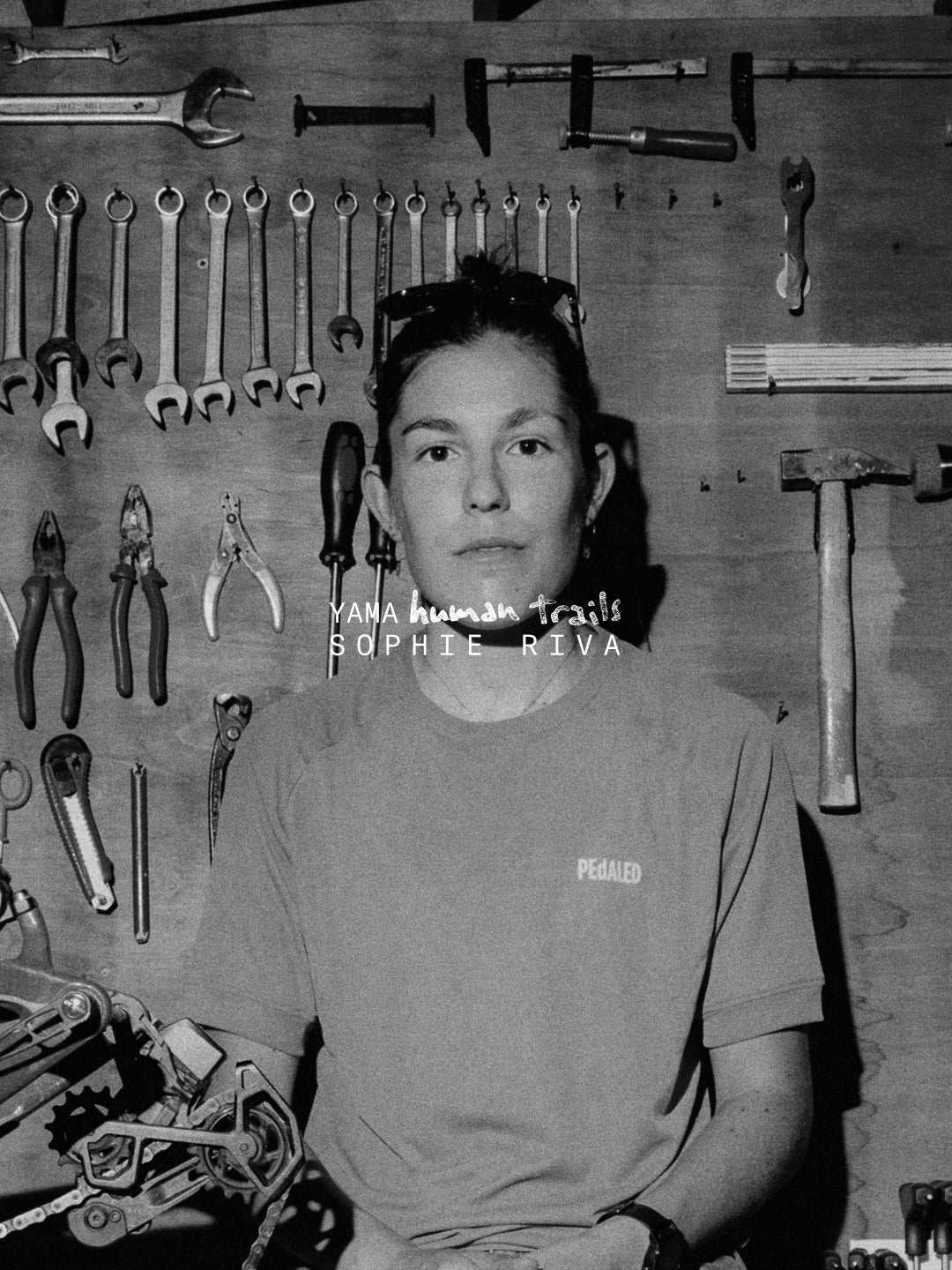
There's a particular kind of quiet after a fast descent — the kind where the mind is still catching up with the body. Sophie Riva knows it well. Every rider carries a different way of understanding the world. For some, it's instinct. For others, it's method. Human Trails is a series about the people behind the ride—their rituals, the places that shape them, and the paths that become part of who they are. For Sophie, life unfolds between two seemingly opposite worlds: the precision of engineering and the unpredictability of enduro. Somewhere between the lecture hall and the mountain trail, she has found her balance.

Can you tell us a bit about yourself? Where does your story begin?


"My name is Sophie, and I grew up in a small village in the Aosta Valley. I spent my childhood barefoot, climbing every tree I could find and riding my bike down every path I came across.

Cycling has been part of my life for as long as I can remember. My parents enrolled me in my local cycling club when I was three years old. At the time, it was simply a summer activity—but looking back, I sometimes feel like cycling found me before I ever had the chance to choose it myself." For Sophie, the bike was never something she discovered later in life. It was always there — not just as a sport, but as a language she learned before she fully understood what it meant.


When did riding become something more than racing?


"I started racing cross-country when I was very young and continued until the youth categories, competing nationally.

But at some point I felt like a hamster running in a wheel. The adrenaline had disappeared. Then I started riding in the mountains just for the pleasure of it. A friend convinced me to enter an enduro race, and suddenly everything came back. The excitement, the curiosity, the desire to ride.

Now the bike is part of my everyday life. It's how I explore the mountains, the places I travel to and, most importantly, it's where my mind becomes quiet.

It's while I'm pedalling that my best ideas arrive—although maybe not everyone would agree they're my best ideas. And when I'm descending, my head is completely free. That's when I'm truly present."

Who is Sophie when she's not riding?


"Most of the time, I'm studying. I'm studying Mechanical Engineering at the Polytechnic University of Turin, and I've always been a curious person. I like understanding how things work.

If I'm not studying or riding, you'll probably find me hiking in the summer, skiing in the winter or experimenting with new recipes in the kitchen."

Engineering and enduro seem to belong to different worlds. Yet Sophie never treats them as opposites — for her, both start from the same question: how does this actually work?

Whether she's tracing the mechanics of a system or reading a line through a rock garden, the instinct is identical: explore first, understand, then trust it.


Engineering is built on method, logic and control. Enduro often asks you to let go of control. How do those two sides of your personality coexist?


"I don't really see them as opposites. Studying engineering has taught me to analyse problems and understand why things work the way they do. Riding has taught me that, even when you've prepared as much as possible, there will always be something you can't predict.

I think that's why I love both.

One satisfies my curiosity before things happen.

The other reminds me that not everything can—or should—be controlled."

You recently chose to step away from racing and focus on university. What did that decision teach you?


"When I won my second Enduro World Cup in Loudenvielle in 2022, it meant a lot because it confirmed that my first victory hadn't been a coincidence.

But the biggest lesson probably came later. The Sophie I was a few years ago would have been disappointed to put racing aside. Today, I don't feel that way anymore.

I still ride, but now I ride because I enjoy it—not because I have to train. At the same time, I'm getting great results at university. I've realised that everything has its own time. Rather than trying to do everything at once and doing it badly, I'd rather focus on one thing and do it well."

Moving from the mountains to Turin must have changed your relationship with riding. What was the hardest part?

"Moving to Turin changed much more than I expected.

Back home, the mountains were always there. I could leave the house and be surrounded by nature within minutes. In Turin, I suddenly found myself surrounded by traffic. Even reaching a small hill to train meant riding through the city first.

More than the trails themselves, I realised how much I missed what the mountains gave me. The bike has always been my way of disconnecting. It's where my mind clears, where ideas come naturally and where I find balance.

For a while, I felt like I'd lost that.

Indoor training became really important—not only physically, but mentally. It reminded me that I was still moving forward in my athletic journey, even if my environment had completely changed."

What does nature give you that you struggle to find anywhere else?

"Nature sets the rhythm of my life. The seasons shape the bigger picture, and even the sun shapes my days. When I'm in the mountains, I feel free. They remind me how small we are, but also how much our choices can affect the environment around us.

The mountains have taught me that you can reach almost anywhere, as long as you're willing to accept the climb before the summit.

And after every summit, there's another climb. Life is cyclical, just like the mountains. When I'm in Turin, I miss them. But I also know they'll still be there when I come back."

For Sophie, the mountains are no longer just where she rides. They have become the place where everything falls back into place. Where thoughts become clearer. Where balance quietly returns.

What has cycling taught you about life outside the bike?


"Cycling has taught me that progress takes time. As long as you keep showing up and keep trying, your efforts eventually turn into improvement. The trails have also taught me to clear my mind. When you're riding through the forest, things become simpler, and that often helps me be more decisive when I have to make choices in everyday life.

I think riding has taught me patience, perseverance and trust in the process."Sometimes, stepping away is enough. The answers tend to follow.

YAMA COLLECTION

Designed for off-road exploration